

Visibility
The share of answers that name your brand. If your non-branded prompts were asked 120 times this week across all engines and runs, and 30 of those answers named you as recommended or mentioned, your visibility is 25%.- It counts non-branded prompts unless you choose otherwise, because those show whether AI picks you when someone is deciding.
- Current is the last 7 days. The change compares it with the 7 days before.
- You can break it down by engine, topic, tag, language and prompt.
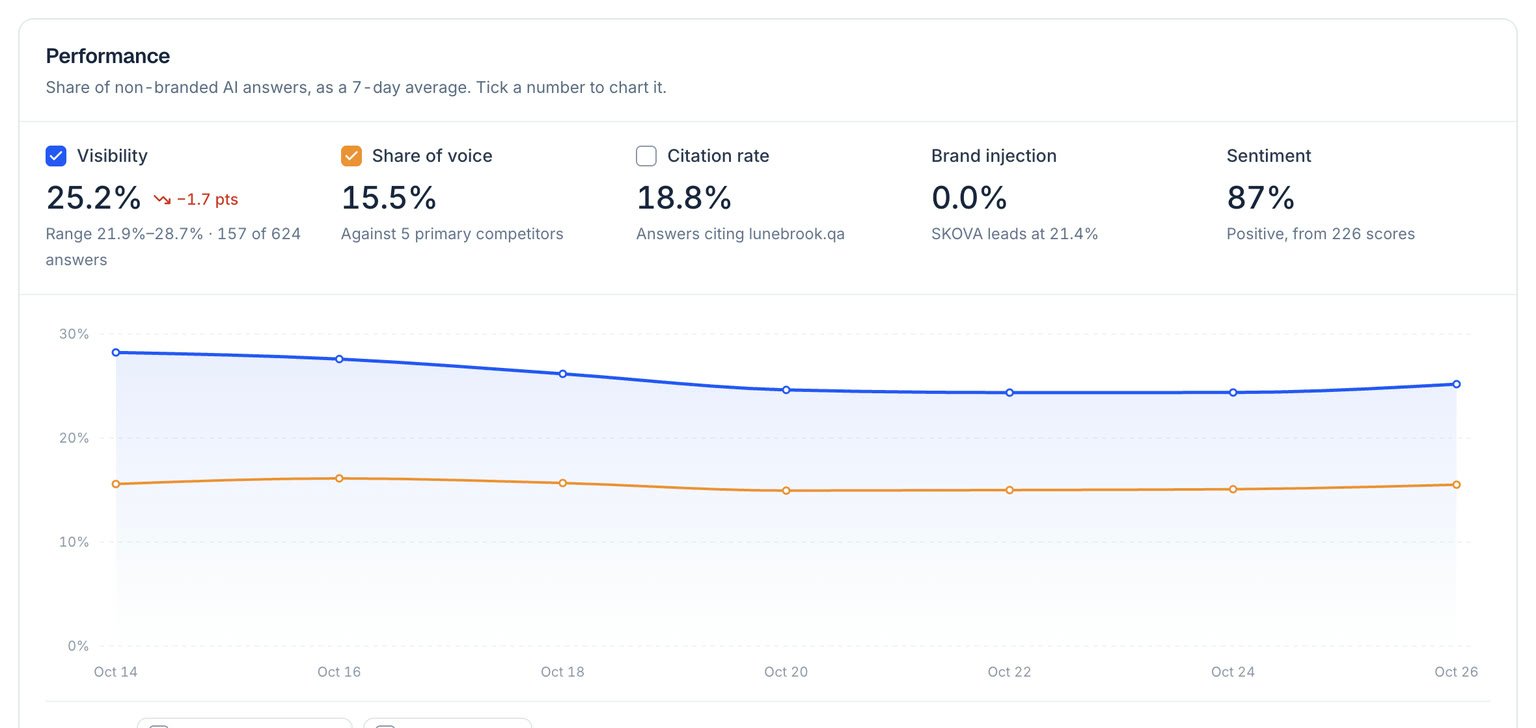
The Performance panel: each number with its change, its range and how it's worked out.
Share of voice
Your share of all mentions among you and your primary competitors. If across this week’s answers your brand was named 40 times and your four competitors 160 times between them, your share of voice is 20%. Where visibility asks “how often are we there?”, share of voice asks “how much of the conversation is ours?”.Average position
When you are named, where in the answer you appear. 1 means first. A brand named in every answer but always last (position 5) is in a weaker spot than one named slightly less often but usually first.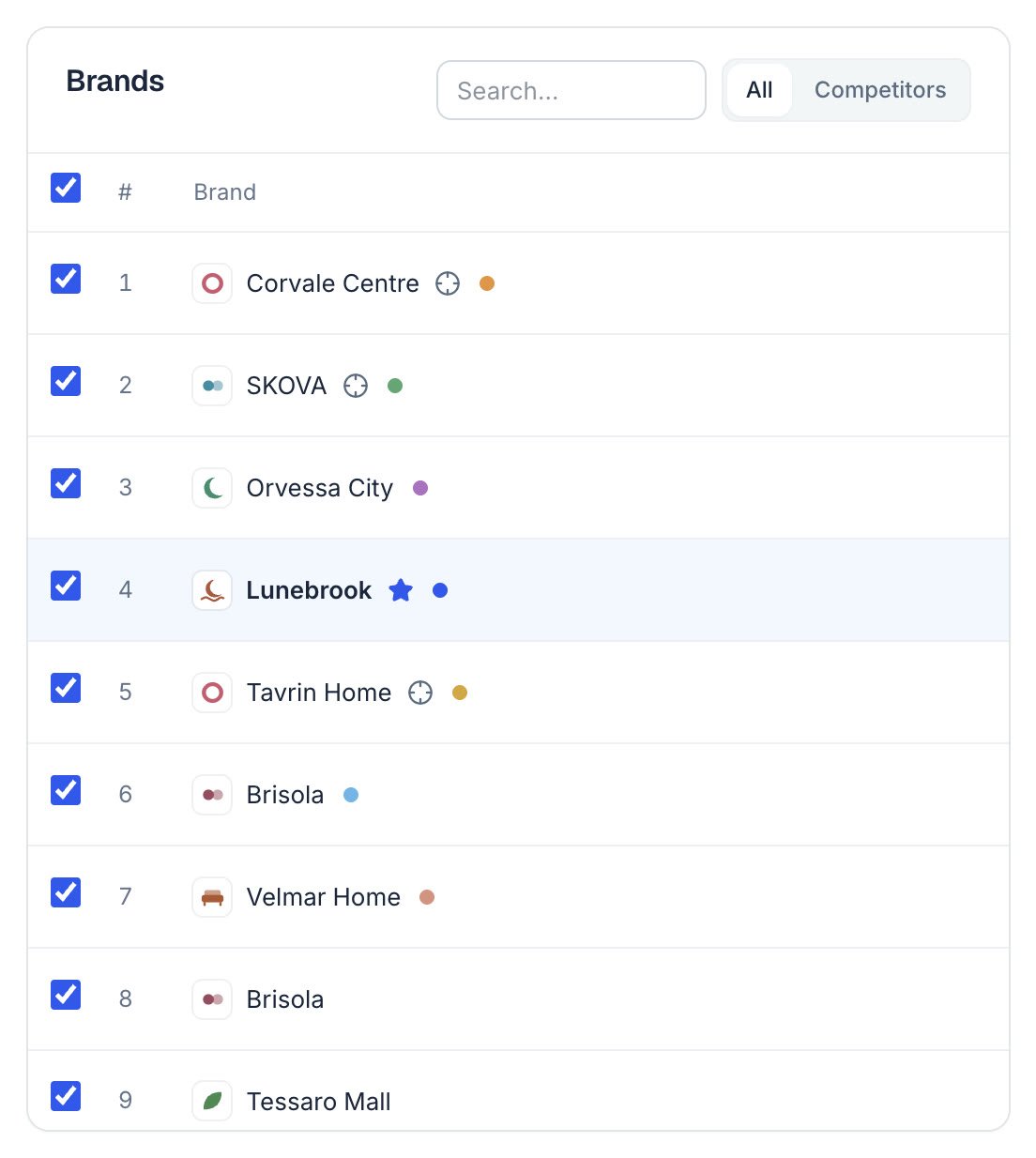
Every brand's visibility, average position and sentiment, side by side.
Sentiment
The share of your mentions that describe you positively. The Sentiment page shows the themes behind it (strengths, weaknesses, positioning) and the exact quotes that produced each score, so you can see what AI actually says.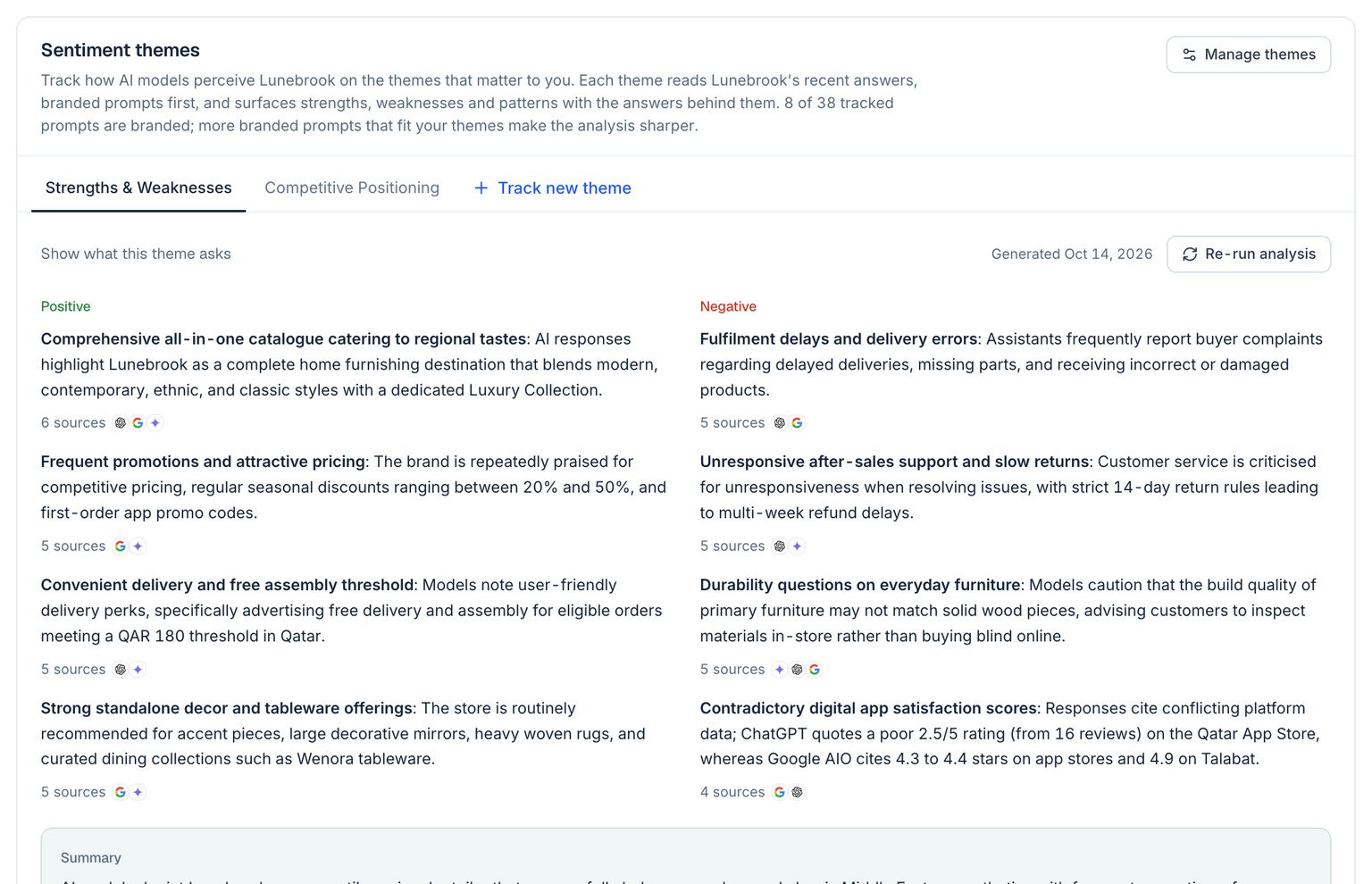
Sentiment themes: the strengths and weaknesses AI repeats about the brand, each with its sources.
Citation rate
The share of answers that link to your own website. Being cited means AI used your page as a source, which tends to keep you in the answer as models are updated.Brand injection
The share of the AI’s own searches that add your brand name unprompted. When someone asks for “the best sofa shop” and the AI searches for “Lunebrook sofas”, it already associates you with the topic. It is shown on the Fanouts page.Weighted score
One visibility figure across engines, each weighted by how much it matters to you. The default weights reflect how many people use each engine:
Only engines with answers in the period count, and their weights are rescaled to add up to 100%. Change them in the market’s settings; the dashboard shows the weights in use.
Accuracy
Statements AI makes about your brand are checked against the facts you keep in your fact sheet (prices, locations, delivery, policies). Each claim is marked: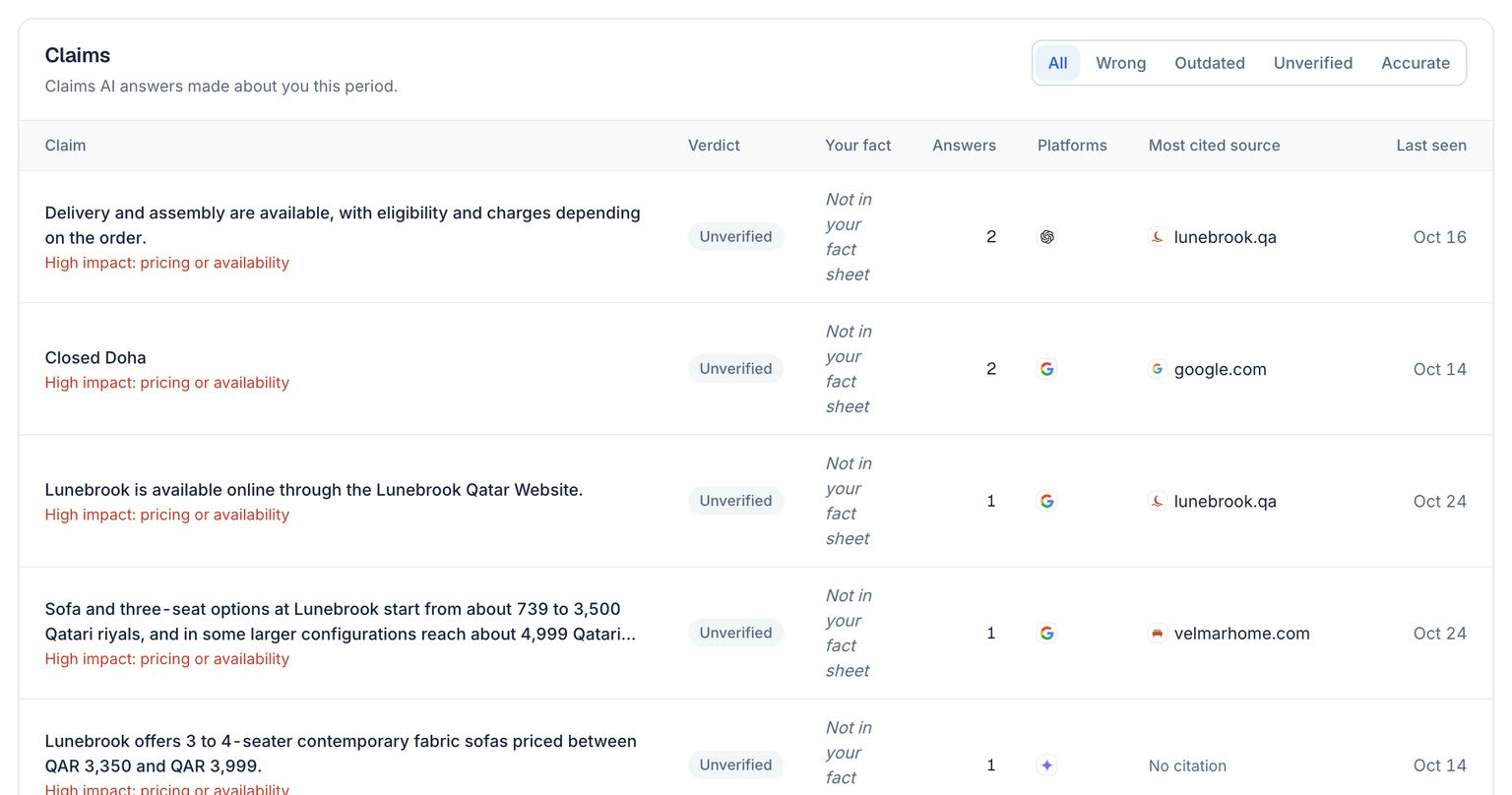
Claims AI makes about the brand, each checked against the facts you keep.
95% ranges
Every rate is shown with the range it could plausibly be, given how many answers it rests on. 50% from 8 answers might really be anywhere from about 22% to 78%; 50% from 300 answers is between about 44% and 56%. The fewer answers, the wider the range.Before acting on a change, check whether the ranges overlap. If this week is 30% (22–39%) and last week was 26% (18–35%), the difference may be noise. More runs per prompt, or a longer date range, tighten the ranges.
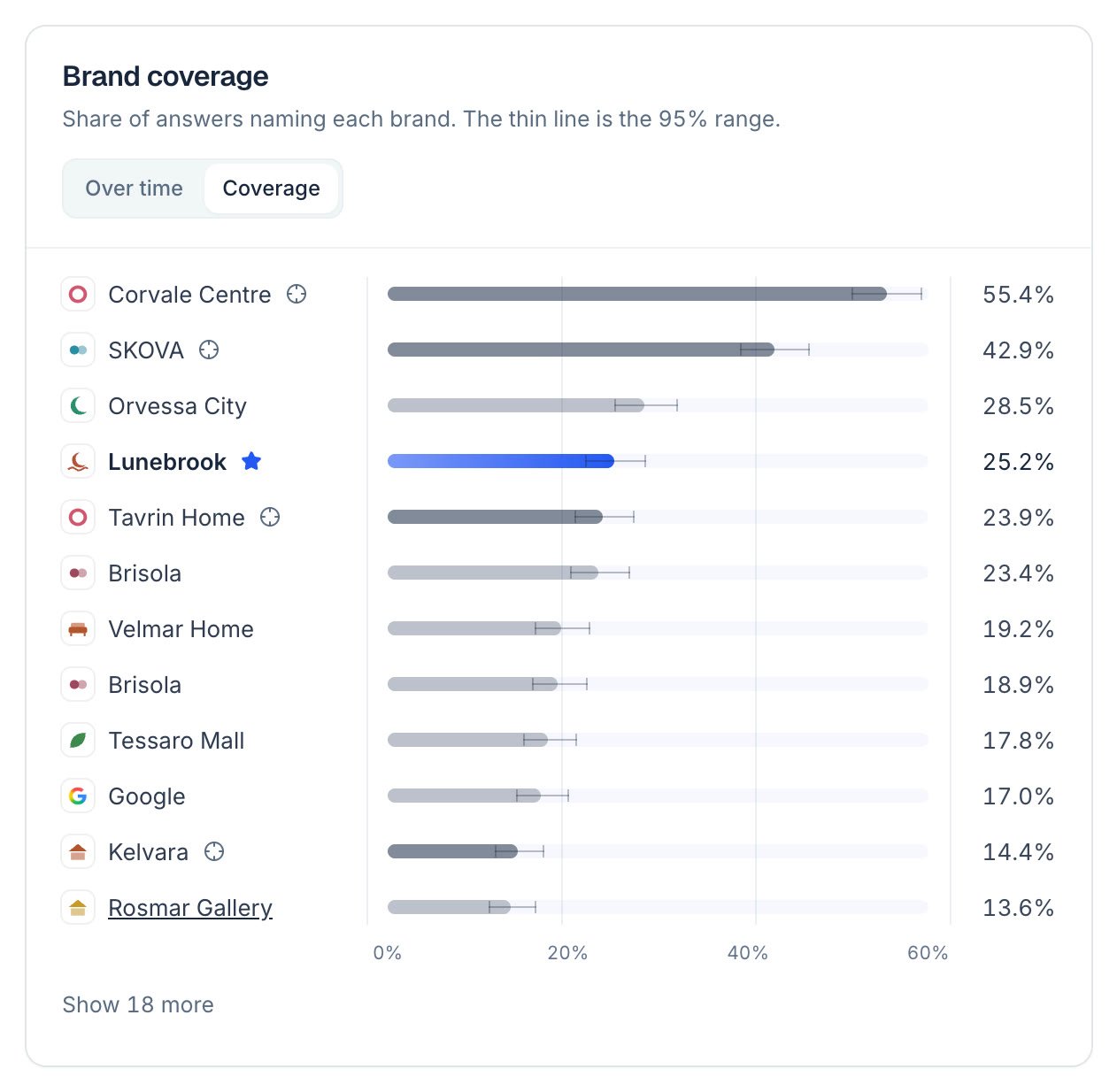
Brand coverage: the share of answers naming each brand, with its 95% range drawn as a thin line.
Filters
Most pages can be filtered by date range (7, 14, 30 or 90 days, or custom), engine, language (all, or one of the market’s languages), topics and tags. Numbers on a page always follow its filters.
The filters at the top of each page: topics, tags, date range, platforms and language.